
Keeping friends should not mean giving up your responsibilities, values, or decisions.
- Friends should support where you’re going, not decide where you end up.
- Extreme loyalty in friendship can cost you your independence
- And in your career, the voices closest to you matter more than you think.
Friendship is influence whether you admit it or not
- Claiming to be “beyond influence” is a gamble.
- Your environment shapes your thinking, decisions, and standards.
Note that influence may not come as direct advice. It could be:
- Conversations you normalize
- Attitudes you absorb
- Habits you tolerate
- Risks you begin to accept
You may not copy your friends but you will be shaped by them.
Shared values matter
Having and keeping friends requires compatibility, especially in the area of shared values. Even at that, every relationship comes with sacrifice, and maintaining a large circle can be overwhelming.
For meaningful friendships, choose a few people who align with your most important goals.
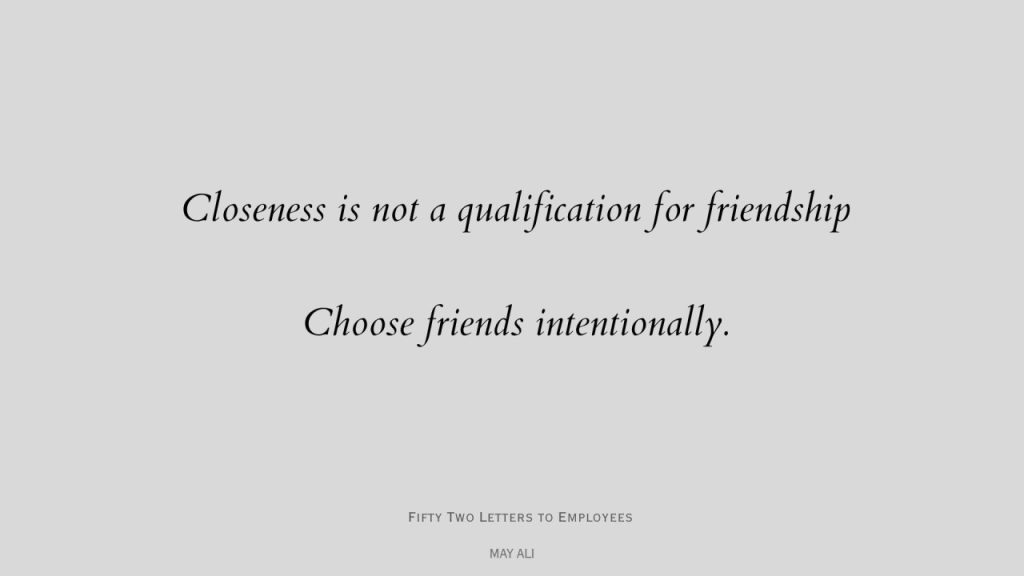
- Closeness is not a qualification for friendship
- A long friendship that pulls you away from clarity, discipline, or growth is unhealthy
- At some point, alignment becomes more important than how long you’ve known each other.
This doesn’t mean cutting people off harshly.
- It is adjusting access so your energy and space are used wisely.
Even the best friendships need boundaries
No matter how close a friendship is:
- You decide which advice to accept
- You decide which influence to allow
Not every friend deserves:
- Full access to your plans
- A voice in major decisions
- Space in your private life
- Permission to interfere or redirect your path
Trust is important but it must be given with caution, not emotion and not blindly
Your part in friendships
Before going deep into friendships, learn habits that protect your mind, time, space, and values first.
- Learn to say no without guilt.
- Keep your values as non-negotiable
- Set boundaries around money, favors, and expectations early
This is not pride or rigidity; it is responsibility because humans are complex:
- Intentions change.
- Circumstances reveal character
Many conflicts don’t start with enemies but with friends who overstayed their alignment.
The pros and cons in friendship
Friendship can bring:
- Emotional support during challenges
- Honest feedback and perspective
- Motivation and encouragement
- Shared experiences and memories
- Accountability and growth
- A sense of belonging
Cons of friendship
- Distraction from goals and priorities
- Pressure to compromise values
- Emotional drain and stress
- Dependence or control
- Conflict that spills into work or career focus
My point is that
Friendship is more than just being close; it’s powerful and deserves real attention. When you’re intentional about it, it supports your life and career. When you’re not, it can slowly hold you back or even ruin you without you noticing.